
PHNOM PENH TAXI
The travelers should book a Phnom Penh private taxi in advance to get a guaranteed set price, avoid hassle, ensure a comfortable and air-conditioned vehicle (SUV car, Minivan, Van and Minibus), and benefit from a reliable, professional door-to-door service.
Booking your journey in advance allows for a pre-arranged pickup time and location, eliminating the stress of finding a last-minute ride and providing peace of mind for your journey.
OUR VEHICEL TYPES

SUV car (Lexus / Highlander) Support: 1 - 3 Pax + Suitcases

Minivan (Toyota Alphard) Support: 1 - 5 Pax + Suitcases
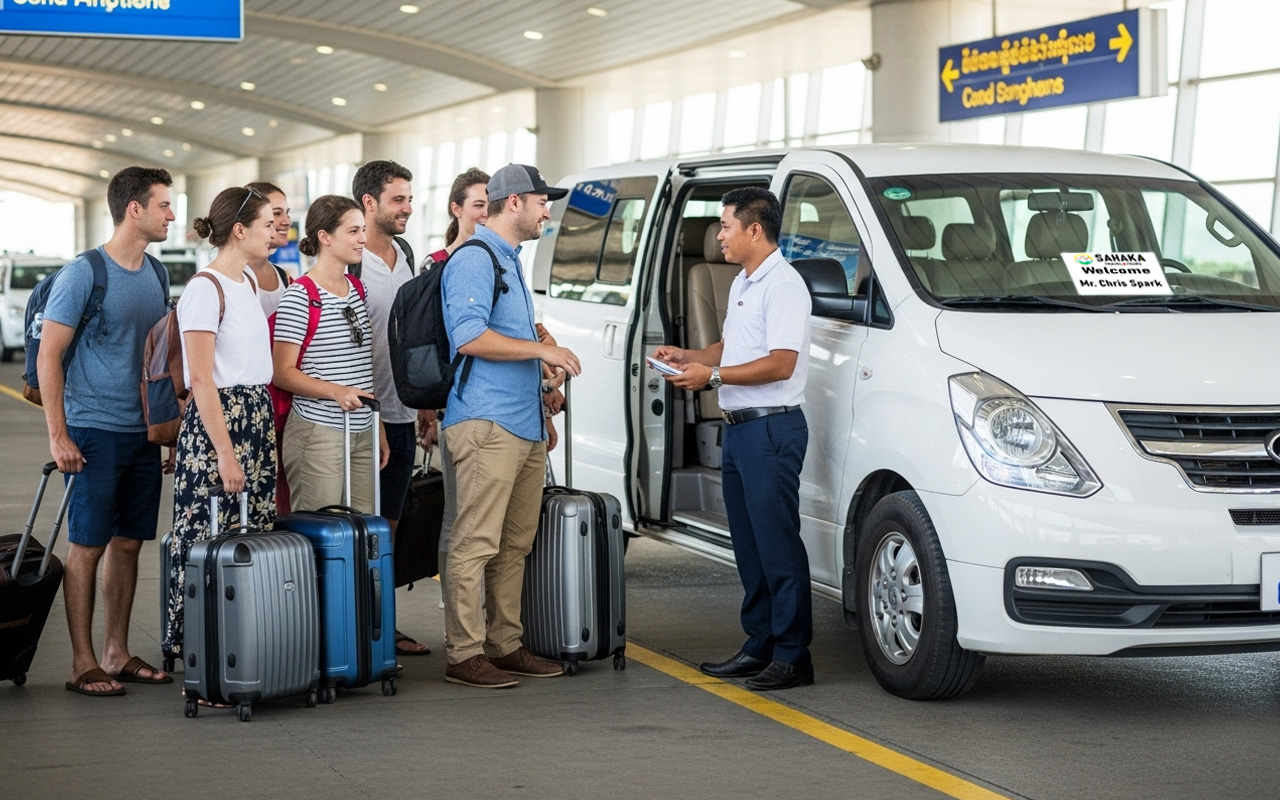
Van (Grand Starex) Support: 1 - 7 Pax + Suitcases
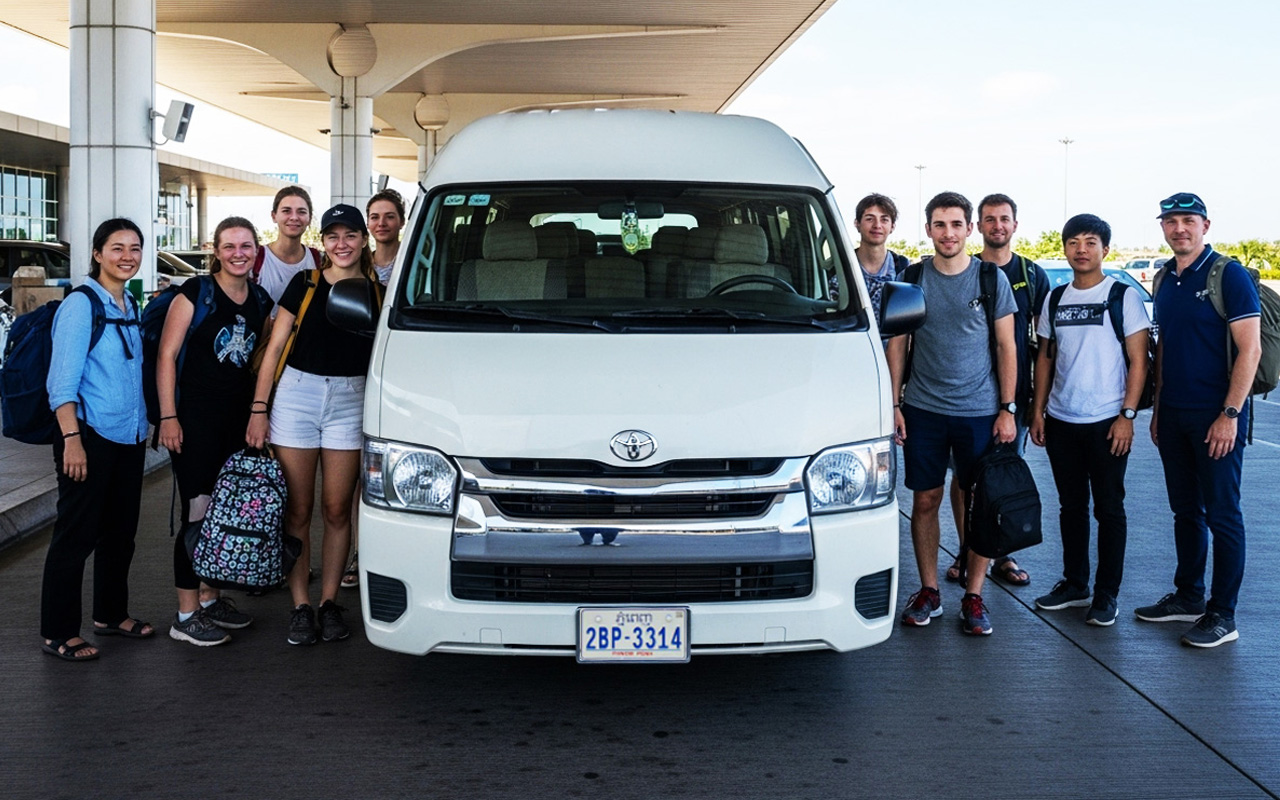
Minivan (Toyota Hiace) Support: 1 - 9 Pax + Suitcases
AIRPORT PRIVATE TAXI
- Phnom Penh to Phnom Penh Techo Airport (KTI) – Private Taxi
- Phnom Penh to Siem Reap Airport (SAI) – Private Taxi
- Phnom Penh to Sihanoukville Airport (KOS) – Private Taxi
- Phnom Penh to Koh Kong Airport (KKZ) – Private Taxi
CITY TO CITY PRIVATE TAXI
- Phnom Penh to Siem Reap – Private Taxi
- Phnom Penh to Sihanoukville – Private Taxi
- Phnom Penh to Battambang – Private Taxi
- Phnom Penh to Kampot – Private Taxi
- Phnom Penh to Kep – Private Taxi
- Phnom Penh to Koh Kong – Private Taxi
- Phnom Penh to Banteay Chhmar – Private Taxi
- Phnom Penh to Bokor National Park – Private Taxi
- Phnom Penh to Kampong Cham – Private Taxi
- Phnom Penh to Kampong Chhnang – Private Taxi
- Phnom Penh to Kampong Thom – Private Taxi
- Phnom Penh to Kirirom National Park – Private Taxi
- Phnom Penh to Kratie – Private Taxi
- Phnom Penh to Sen Monorom – Private Taxi
- Phnom Penh to Oddar Meanchey – Private Taxi
- Phnom Penh to Pursat – Private Taxi
- Phnom Penh to Banlung – Private Taxi
- Phnom Penh to Shanghai – Private Taxi
VIETNAM BORDER PRIVATE TAXI
- Phnom Penh to Bavet / Moc Bai Border – Private Taxi
- Phnom Penh to Banteay Chakrei / Dinh Bà Border – Private Taxi
- Phnom Penh to Chrey Thom / Long Binh Border – Private Taxi
- Phnom Penh to Kaam Samnor / Vĩnh Xươngi Border – Private Taxi
- Phnom Penh to Muern Chey / Tân Nam Border – Private Taxi
- Phnom Penh to Phnom Den / Tịnh Biên Border – Private Taxi
- Phnom Penh to Prek Chak / Ha Tien Border – Private Taxi
- Phnom Penh to Prey Vor / Long Khot Border – Private Taxi
- Phnom Penh to Trapeang Phlong / Xa Mát Border – Private Taxi
- Phnom Penh to Trapeang Sre / Hua Lư Border – Private Taxi
THAILAND BORDER PRIVATE TAXI
- Phnom Penh to Cham Yeam / Hat Lek Border – Private Taxi
- Phnom Penh to Choam or Anlong Veng / Chong Sa-ngam Border – Private Taxi
- Phnom Penh to Kamrieng or Duang / Ban Laem Border – Private Taxi
- Phnom Penh to O'Smach / Chong Chom Border – Private Taxi
- Phnom Penh to Phsar Prum / Ban Pakard Border – Private Taxi
- Phnom Penh to Poipet / Ban Klong Luk Border – Private Taxi
LAOS BORDER PRIVATE TAXI
ABOUT PHNOM PENH TAXI
Phnom Penh is the capital and most populous city of Cambodia. It has been the national capital since the French protectorate of Cambodia and has grown to become the nation’s primate city and its economic, industrial, and cultural center.
Phnom Penh succeeded Angkor Thom as the capital of the Khmer nation but was abandoned several times before being reestablished in 1865 by King Norodom. The city formerly functioned as a processing center, with textiles, pharmaceuticals, machine manufacturing, and rice milling. Its chief assets, however, were cultural. Institutions of higher learning included the Royal University of Phnom Penh (established in 1960 as Royal Khmer University), with schools of engineering, fine arts, technology, and agricultural sciences, the latter at Chamkar Daung, a suburb. Also located in Phnom Penh were the Royal University of Agronomic Sciences and the Agricultural School of Prek Leap.
The city was nicknamed the “Pearl of Asia” for its early 20th century colonial French architecture, which included Art Deco works. Phnom Penh, along with Siem Reap and Sihanoukville, are significant global and domestic tourist destinations for Cambodia. Founded in 1372, the city is noted for its historical architecture and attractions. It became the national capital in 1434 following the fall of Angkor, and remained so until 1497. It regained its capital status during the French colonial era in 1865. There are a number of surviving colonial-era buildings scattered along the grand boulevards.
On the banks of the Tonlé Sap, Mekong, and Bassac Rivers, Phnom Penh is home to more than 2 million people, approximately 14% of the Cambodian population. The Greater Phnom Penh area includes the nearby Ta Khmau city and some districts of Kandal province.
Transportation in Phnom Penh
Phnom Penh Techo International Airport (KTI), Grand open on 9th September 2025, is the largest and busiest airport in Cambodia. It is located over 30 kilometers south of Phnom Penh. It replaced the old Phnom Penh Pochentong International Airport as the city’s main aviation hub. The airport is connected to the city center by taxi, train, and shuttle bus. Cambodia’s national flag carrier, Cambodia Angkor Air (later rebranched as Air Cambodia in 2025), launched in 2009, is headquartered in Phnom Penh and has its main hub there, with an additional hub at the Siem Reap–Angkor International Airport (SAI). Air France used to serve Phnom Penh from Paris-Charles de Gaulle but this service has since stopped. Qatar Airways now flies to and from Phnom Penh, via Saigon. Taxis, pick-ups, and minibuses leave the city for destinations all over the country, but are fast losing ground to cheaper and more comfortable buses.
The capital of Phnom Penh also has a rail service. There are numerous bus companies, including Phnom Penh private Transport, running services to most provincial capitals, including Sihanoukville, Siem Reap, Kampong Chhnang, Oudong, Kampot, Kep, Koh Kong, Battambang, Takéo and to the border of Laos, Thailand and Vietnam. The city is Cambodia’s main freshwater port, a major port on the Mekong River. It is linked to the South China Sea, 290 kilometers distant, via a channel of the Mekong in Vietnam.
Public transport
Phnom Penh City Bus is served by air conditioned public buses. Initial attempts by the Japanese government to develop a Phnom Penh bus service began in 2001. An update of the JICA urban transport master plan for Phnom Penh was completed and implemented in 2014. The city is now served by 21 bus lines, operated by the Phnom Penh municipal government. Private transportation within the city include the cycle rickshaw, known in Khmer as “cyclo”, the motorcycle taxi known in Khmer as “moto”, the auto rickshaw known locally as “tuk-tuk”, the trailer attached to a motorcycle taxi known in Khmer as “remorque”, and the standard automobile taxicab known in Khmer as “taxi”. Private forms of transportation used by locals include bicycles, motorbikes, and cars.
Railway
Phnom Penh railway station is a railway station in Phnom Penh. It is located next to the University of Health Sciences and the National University of Management as well as the Canadian embassy. This station was renovated and formally reopened October 22, 2010.
Scheduled passenger train services between Phnom Penh and Sihanoukville resumed in May 2016 after having been suspended for 14 years. After that, many passenger train service continue to resume. As of May 2021, there is scheduled train service between Phnom Penh to Krong Pursat, Krong Battambang, Krong Sisophon, and Poipet at the Border to Thailand.