
SIHANOUKVILLE TAXI
Sihanoukville taxis are a reliable choice for transport within the city and to other destinations in Cambodia due to the flexibility, door-to-door service, and ability to accommodate various travel needs.
We provide private, comfortable, and safe transfers, with professional drivers for long-distance routes to/from Phnom Penh, Siem Reap, Battambang, Kampo, Kep or to the border between Cambodia – Laos, Thailand and Vietnam and can be booked in advance.
OUR VEHICEL TYPES

SUV car (Lexus / Highlander) Support: 1 - 3 Pax + Suitcases

Minivan (Toyota Alphard) Support: 1 - 5 Pax + Suitcases
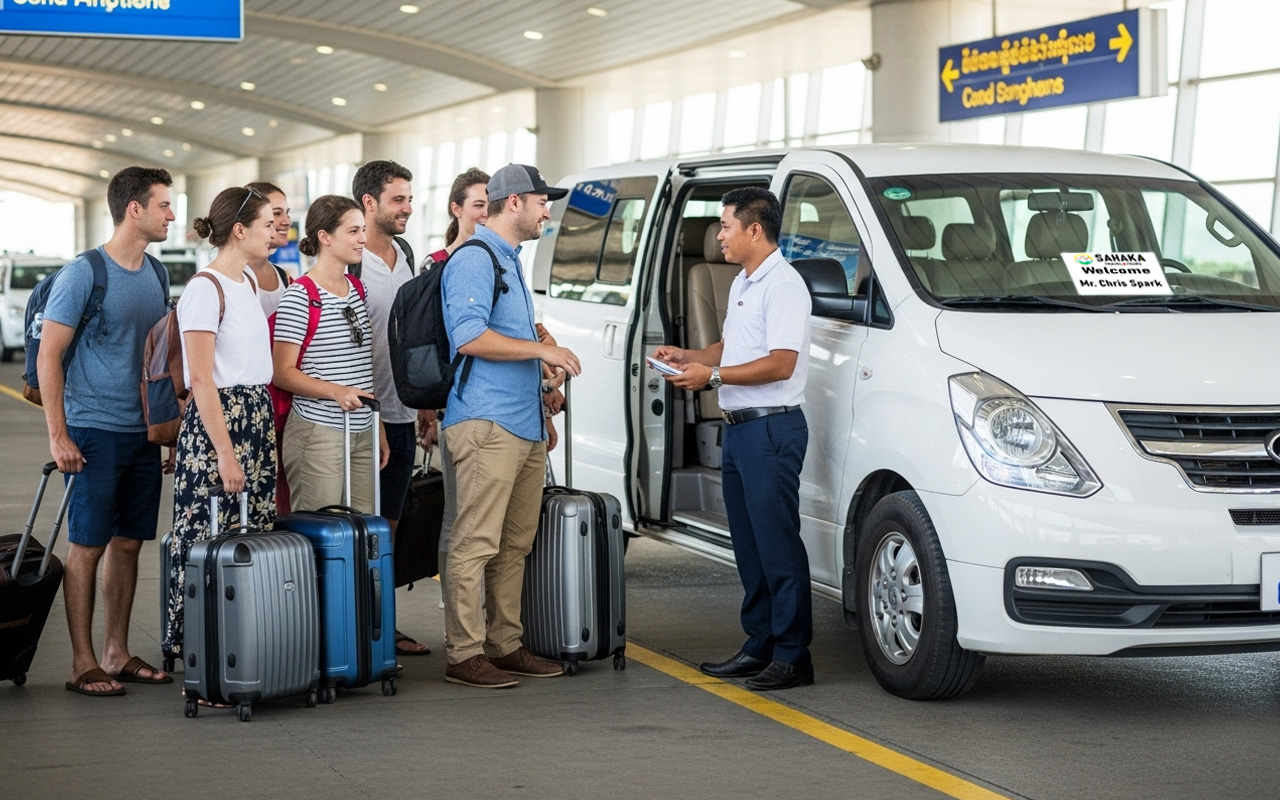
Van (Grand Starex) Support: 1 - 7 Pax + Suitcases
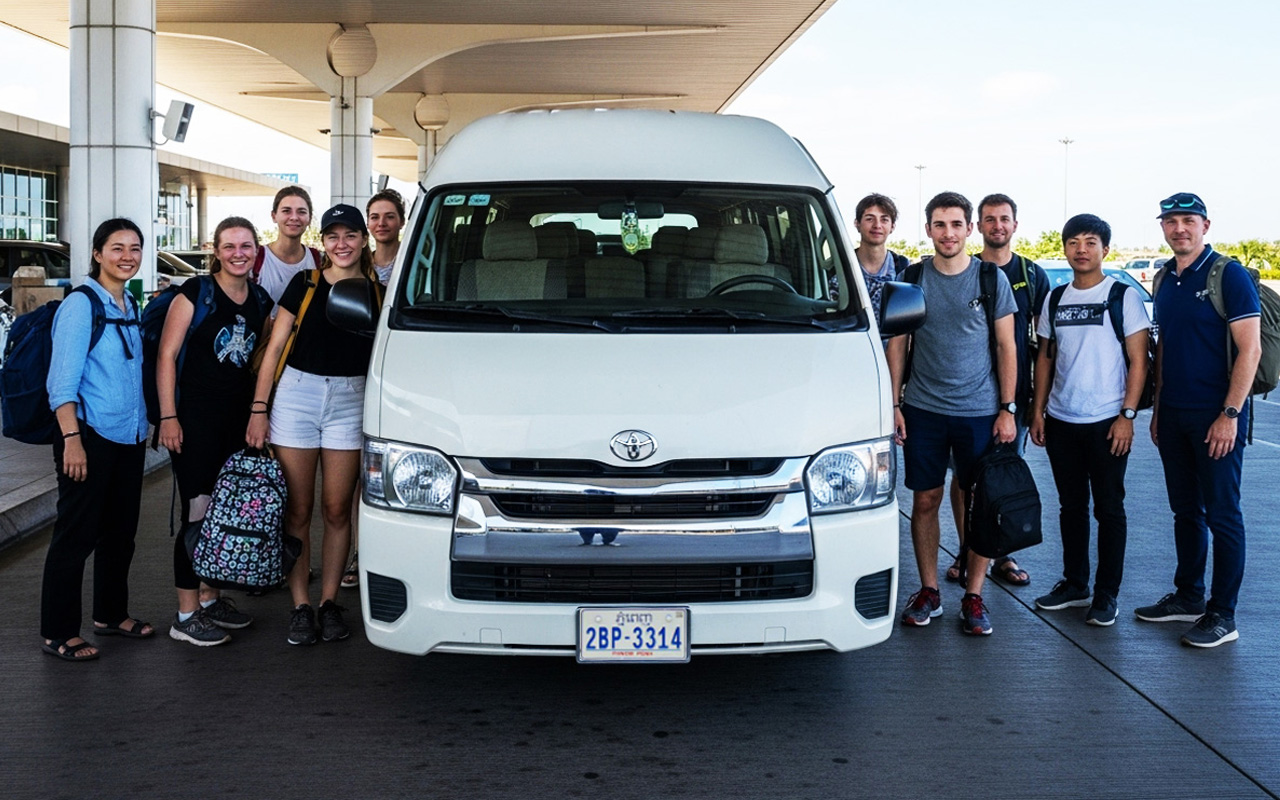
Minivan (Toyota Hiace) Support: 1 - 9 Pax + Suitcases
CITIES PRIVATE TAXI
- Phnom Penh Techo Airport (KTI)
CITIES PRIVATE TAXI
- Phnom Penh Techo Airport (KTI)
ABOUT SIHANOUKVILLE
Sihanoukville City; Khmer: ក្រុងព្រះសីហនុ, Krŏng Preăh Seihănŭ “kroŋ prĕəh səjhanu”, also known as Kampong Som (Khmer: កំពង់សោម, Kâmpóng Saôm [kɑmpɔŋ saom]), is a coastal city in Cambodia and the capital of Preah Sihanouk Province, at the tip of an elevated peninsula in the country’s south-west on the Gulf of Thailand. The city is flanked by an almost uninterrupted string of beaches along its entire coastline and coastal marshlands bordering the Ream National Park in the east. The city has one navigable river, the mangrove lined Ou Trojak Jet running from Otres Pagoda to the sea at Otres. A number of thinly inhabited islands – under Sihanoukville’s administration[4] – are near the city, where in recent years moderate development has helped to attract a sizable portion of Asia’s individual travelers, students, and backpackers.
The city, which was named in honour of former king Norodom Sihanouk, had a population of around 89,800 people and approximately 66,700 in its urban center in 2008. Sihanoukville city encompasses the greater part of six communes (Sangkats) of Sihanoukville Province. A relatively young city, it has evolved in parallel with the construction of the Sihanoukville Autonomous Port, which commenced in June 1955, as the country’s gateway to direct and unrestricted international sea trade. The only deep water port in Cambodia includes an oil terminal and a transport logistics facility. As a consequence, the city grew to become a leading national center of trade, commerce, transport, and process manufacturing.
Sihanoukville’s many beaches and nearby islands make it Cambodia’s premier seaside resort with steadily rising numbers of national visitors and international tourists since the late-20th century.
As a result of its economic diversity, the region’s natural environment, and the recreational potential, an increasing number of seasonal and permanent foreign residents make Sihanoukville one of the most culturally varied and dynamic population centers in Cambodia. As of 2014 tourism remains insignificant in comparison with neighboring Thailand. Sihanoukville’s future will largely be defined by the authorities’ ability to successfully manage natural resources on the one hand and the necessities of urban and insular development, increasing visitor numbers, expanding infrastructure, the industrial sector and population growth, on the other.
Despite being the country’s premier sea side destination, after decades of war and upheaval the town and its infrastructure remain very much disjointed and architecturally unimpressive. Infrastructure problems persist, in particular related to water and power supply, while international standard health facilities remain limited.
Sihanoukville also faces challenges related to crime, security, and safety with the city frequently being the focus of scandals linked to serious organized crime, petty crime, and corruption.
In recent years, Sihanoukville has seen unprecedented levels of Chinese investment into the city with numerous casinos having opened up throughout the city. Demographically, the city’s ethnic make up has changed with nearly 80,000 mainland Chinese workers, developers and investors accounting for 90% of the city’s expat population as of 2019. Mandarin signage is increasingly replacing Khmer and English signage in the city and crime in the form of drunken violence and organized crime are increasing. Sihanoukville is one of the major cities on China’s One Belt One Road Initiative.
ABOUT SIHANOUKVILLE TRANSPORTATION
The central long-distance bus station for all transport business operators is on National Highway 4 in the city’s north-east near the Autonomous Port. Transport business operators maintain booking offices in the urban centers. Many companies compete with its buses’ daily scheduled services.[93] Buses operate from the early morning until the afternoon plus a daily night-bus/sleeper. Privately operated taxi stands for long-distance transportation are found at the central bus station, in the commercial urban center and the tourist center in the South.
The city has no public transportation. Local administration issues transport licenses for the informal urban system of motor-taxis (moto-dups) and tuk-tuks. The system is not administered by authorities, as anybody can become a motor-taxi or tuk-tuk driver. The overwhelming majority of drivers do not know street names or numbers.
Airport:
Sihanoukville International Airport (International Air Transport Association code KOS) was formerly called Kang Keng Airport (ព្រលានយន្តហោះ កង កេង), named after the Minister of Health of the Khmer Republican regime during the 1970s. The airport is in Ream Commune in central Sihanoukville Province. It is near National Highway 4, around 500 meters (1,600 feet) from Ream beach atop a former mangrove lagoon, about 18 kilometers (11 miles) from Sihanoukville City. As of July 2019, there were close to 200 flights from China to Sihanoukville every week.
Marine transport:
The last daily national official Sihanoukville city–Krong Koh Kong marine ferry ceased operation with the completion of National Highway 48 in 2007.
Koh Rong Island and Koh Rong Sanloem Island have daily ferry services.
Marina Oceania, the first marina in Cambodia operational and fully equipped since 2013 for yachts and boats up to 25 metres (82 feet) with 4-to-5-metre-deep (13-to-16-foot) berths for 20 boats. It is at the local port’s pier, near Koh Preab Island. (coordinates: 10°39’59″N / 103°30’41″E)
Rail transport:
Sihanoukville railway station or Rail transport in Cambodia:
Cambodia’s railway network was reconstructed for freight transport during the last years by Toll Holdings, which obtained a building and maintenance concession from the Royal Cambodian Railway. The “Southern line”, constructed from 1960 to 1969 with a length of 264 km (164 mi), connects Sihanoukville Port Special Economic Zone with Phnom Penh.
A daily passenger train service runs from the station near the Autonomous Port used to manage passenger train transportation to Phnom Penh via Kampot.